


































Brava Launches Innovative Project to Treat Dental Fluorosis, Which Affects a Large Portion of the Population
The Fluorescer Brava project has launched a clinical mission on the island to treat cases of dental fluorosis using minimally invasive techniques and innovative technologies. The initiative aims to help dozens of patients in this first phase and train Cape Verdean professionals to ensure the continuity of treatment.

The Fluorescer Brava has officially launched an oral health mission on the island of Brava with the goal of treating cases of dental fluorosis that affect a significant portion of the local population. The initiative relies on innovative and minimally invasive techniques to remove the stains caused by excess fluoride, while preserving the natural structure of the teeth.
The mission brings together a team of national and international specialists who, during this first phase, aim to treat approximately 80 patients over two days of clinical intervention. In addition to direct patient care, the project includes training for Cape Verdean professionals to ensure continuity of care after this mission concludes.
Speaking to Inforpress, the project’s international coordinator, dentist Sandra Kalil Bussadori, explained that the main objective is to restore the aesthetics and functionality of the teeth of people affected by fluorosis.
According to the specialist, the procedures include stain removal, teeth whitening, and the application of an innovative technique based on an infiltrant that significantly reduces the appearance of stains without resorting to aggressive treatments.
The project’s national coordinator, dentist Carla Freire, emphasized that the initiative represents a major advance for public health on the island, given the positive impact it could have on the population’s self-esteem, oral health, and quality of life.
According to Carla Freire, state-of-the-art materials and technologies—developed based on scientific research—will be used to strengthen teeth weakened by fluorosis and significantly improve aesthetic results.
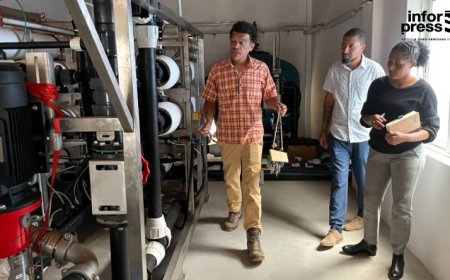
Despite the progress made by this treatment, experts emphasize that the definitive solution to reduce new cases lies in controlling the concentration of fluoride in drinking water, since fluorosis results from excessive fluoride intake during tooth development.
Dental fluorosis manifests as whitish, yellowish, or brownish spots and, in the most severe cases, can weaken the tooth structure.
The island of Brava remains one of the regions in Cape Verde with the highest incidence of this condition, a consequence of the high levels of fluoride recorded in drinking water over several years. Through the Fluorescer Brava project, the goal is not only to improve the oral health of patients currently affected but also to build local technical capacity to ensure the continuity of treatment and promote a better quality of life for the population.